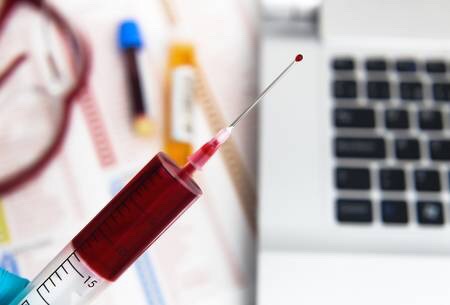
Blood As Food

Blood as food? I think it’s safe to assume that most wouldn’t consider such a statement an even remotely pleasant idea. People are, in general, deeply squeamish about the thought of blood itself, never mind actually coming in contact with or consuming the conspicuous liquid. While there are certainly natural motivating factors behind being reluctant about or repelled by blood, the most pervasive culprit for this inclination has a lot to do with shifting cultural biases & trends.

In many parts of the world, blood is still widely consumed on a regular basis & inherently worked into the ritual of slaughter itself. Not only does it provide an important nutritional role within the diet, it also makes up a good portion of the total yield of an animal. There can be forty liters of blood in one cow alone, just to bring things into perspective. Wasting such a large portion of an animal is not only ridiculous, but simply out of the question for a good number of people. Many can’t afford to be so far removed from their food, or to cherry-pick what parts they’d prefer to utilize for their meals. Necessity aside, however, nose to tail eating is actually a more reasonable & sustainable practice to be mindful of.

Beloved in one culture, abhorred in another, blood makes for a fascinating, if polarizing ingredient. Though I find its dubiousness to be questionable if handled with care, it does have a high rate of spoilage, a huge mess factor, & reacts quite finicky when introduced to heat. Still, it can be a beautifully versatile ingredient, as long as it’s basic nature is kept in mind. Blood is traditionally used as a thickener in sauces, a binder in sausages & terrines, a minerally pungent kick to both savory and sweet dishes alike. If the metallic twang sounds off putting, try pairing it with spices, cream, fruits, even chocolate.

For as long as humans and their ancestors have hunted animals & eaten meat, they’ve utilized blood for both comestible means & basic nutritional needs. Although it’s fallen out of fashion in recent times, evidence of blood usage in culinary applications can still be found by those who are willing, curious, & open-minded enough to dig a bit deeper & entertain new possibilities. In this section, we at The Red Cellar will attempt to celebrate this grossly overlooked and underutilized ingredient &, with luck, perhaps ease some of the stigma it seems to carry.

Blood As Food : Articles
Blood As Food : Recipes
Blood As Food : Links
Blood As Food : Instagram

Why Do We Grill Sanguinarians? Help, Don’t Judge

No, I’m not talking about a sanguinarian barbecue. Though that could be interesting.

First, let me clarify my use of the term ‘sanguinarian’ for the purposes of this article. Sanguinarian is generally defined as someone who ‘needs’ to ingest blood for their health. That is the context with which I will use the term here.

I certainly believe that a degree of questioning and healthy skepticism is needed. Yet, there tends to be a bad habit of grilling someone who is trying to figure out their blood need as if to ‘discredit’ them as having a legitimate need or being a ‘sanguinarian’, as if it is some elite club to which only qualified members can join and use the term for themselves. “More vampire than thou” seems applicable here.

Read More »

Silence Is Their Greatest Weapon: Donor Exploitation and Abuse by CJ!

A private vent from a friend of many donors who have been abused by self-proclaimed “vampires” inspired this article. Many med sangs are loathe to acknowledge the existence of the “vampire community.” In the long run, active connections to the community may hurt our campaigns toward medical studies to find what may be behind our perceive need for blood, as evidenced through Dr. Tomas Ganz dinging Alexia stating that calling herself “Countess Alexia” resonates fantasy rather than actual need, despite the name being a nod to her Lady Gaga fandom rather than her sanguivory. Right now, providing practical support for blood drinkers with perceived physiological needs and donors without fantastic pretense is our priority and this necessitates some interaction with the vampire community. Many blood drinkers, donors, and even some metaphysically oriented people have found sanctuary in our community as an escape valve from the cults of personality and abuses of authority which permeate the vampire community.

Read More »

Interview with Alexia – The Red Cellar, Sanguivores & Med Sangs

[Interview request is from Cory Kai Draken, agreed to by Alexia for posting on TRC’s website]

First off please allow me the express my sincere appreciation for you taking the time to enlighten us about the donor and med sang relationship. You have a wonderful website, www.theredcellar.com where they can read blog posts that go more in-depth on the views of med sangs/donors and the world you call home.

1. So the first question has to be what is the difference between a vampire and a med sang?

Med sang stands for ‘medical sanguivore’. A med sang is a person who perceives a need to drink blood to maintain their physical health and to offset health deterioration; and perceives this to be entirely physiological, absent any metaphysical connotations to the condition. Typically, med sangs are skeptics and atheists, though some may have different beliefs. We drink blood in large quantities. ‘Vampire’ is a creature of folkloric myth and it is an identity I do not subscribe to. It’s an umbrella term and catch-all that many people identify with for various reasons. For the purposes of scientific inquiry, that all is undesirable baggage and we do not perceive ourselves to be vampires. Med sangs encourage introspection, asking questions, and the pursuit of ‘why’.

Read More »

Sang ‘Feeding’ – Where To Learn Venipuncture

Many sangs require blood in a certain volume. Many stay underfed because they don’t know how to take what they need safely, or even that they need such an amount. As med sang ‘feeding’ methods have become more mainstream, a lot of curiosity has erupted about our practices. Some query how they can safely do the same things so they can get the volume they need.

The problem with this is that it’s impossible to write a guide for this, not only due to potential liability, but because it is such a complex, technical procedure. I wouldn’t be able to do it justice. Venipuncture is actually a minimally invasive surgical procedure technically. People go to school for it for a long time. It does carry serious risk and consequences if performed negligently which I’ve covered in previous articles.

Read More »

Sanguivore Society: Our Culture, Conduct and Precedent

Cover art: Garth Knight

We have long espoused that blood drinkers do not have rules. There is no governing body. We have no laws other than those set by society at large. Laws are rules enforceable by an authority/the state which we are all expected to follow. Blood drinkers do not have any such authority, nor (I believe) would we ever. However, blood drinkers do not operate in a vacuum. As with all gatherings of people around a commonality, there are unspoken ‘rules’ or courtesies that we all follow. Cutting in line won’t end you up in Court (a real Court, not one of those vampire ones), but it will get you some serious side-eye. This is just one example. We are all, to a greater or lesser extent, expected to follow common sense boundaries set by society.

The blood drinker community is no different. There are unspoken courtesies that, over the years, have come to be properly expected of those involved in a topic so sensitive as blood drinking. Some people could lose their livelihood if ‘outed’. These can include things like discretion, trust, integrity. Not sharing confidential information, not blabbing or bragging about things that should remain private/between personal conversations. Talking about ‘the hunger’ and shameful feelings in the confidence that it will stay within that conversation. Use common sense. Be safe. Be trained. Don’t make the rest of us look bad through inappropriate or dangerous behaviour. There are little regional things I’ve noticed too – even so far as one sang offering another their donor, sharing sources or offering some vials of blood as one would offer a beer; a sign of generosity. There are obvious safety concerns with that with blood testing, but that is outside the scope of this article.

Due to the nature of blood drinking and the vampire archetype, it goes without saying that sanguivores will be perceived/related with the whole ‘vampire’ bit. Some circles handle things in their own way. If an individual is particularly dangerous, ‘community warnings’ or ‘excommunications’ can be posted.

Despite no ‘legal’ binding beyond the actual laws we are all expected to follow, how leaders respond to situations does set a precedent. We have to be extremely careful in how we handle situations as they arise. People watch, people remember, and people expect consistency with someone’s principles. We set for ourselves a margin of acceptance within which we manoeuvre. As with law, each case is unique and facts change; but if we flip flop from one stance to another, our integrity and conviction will not be taken seriously.

I rarely defend people in situations. I defend my principles and what I think is right. Sanguivores are my first priority. That includes them, their donors and overall well-being. We make mistakes and what is important is that we learn from them. The precedent we set lays the groundwork for what kind of community culture is to follow. It is the responsibility of leaders to cultivate a culture that is conducive to the growth of its people (i.e. sanguivores). An example of this is with a dear friend of mine whom, several years back, accidentally botched the slaughter of a rabbit for blood. Another sang made this public. Despite becoming highly proficient at the skill, she was vilified and called ‘bunny butcher’. I have always been of the opinion that it was breaking an unspoken, almost sacrosanct, rule to not sell out another sang with something highly confidential discussed in trust. If she were still alive, and if the community culture is one of learning, she could have been able to educate someone to avoid her mistakes. My stance on such things has never changed. Of course, if someone is breaking ACTUAL serious laws, they should be reported to the authorities accordingly.

As always, the precedent I want to set for sanguivores is one of openness, learning, guidance, and support. I will always stand by my convictions in that regard and openly oppose anything which I feel creates, or could create, a hostile environment for sanguivores. We walk a difficult path with few who understand, and deserve safe spaces with those of like-kind.

Life As A Donor – A Donor’s Perspective, by Z

[Guest post by ‘Z’]

Sangs write about what it is like for them so I thought I would do something similar from my perspective. I have a main sang, but I do also donate to others. With my partner, my primary means of donating involves razor blades and direct feeding, and with others it will be with needles.

Every time I do either, I know the risks and even though they are low and I do as much as I can to lessen the risks, it’s still there, I am quite fortunate to of not experienced any of the worse potential side effects; but it doesn’t change the fact that I have hundreds of scars from donating. It might not seem like a big deal, but it really does add up… Using needles is much better because it means you don’t have as many scars, but it comes with more risks and sometimes with me it’s not even worth the reward, which is both extremely frustrating for all involved and drives me to take even more risks because of that. Which I know I shouldn’t, but it’s hard not to when you know people are relying on you.

After donating you’re left with your cuts and marks, which can make things kind of awkward as you have to hide them from pretty much everyone else, which isn’t always easy. It kind of makes you paranoid and feel pretty shitty at the same time, you feel bad because you are hiding things and lying to people who wouldn’t understand and paranoid because you don’t what what would happen if they found out.

Being a donor isn’t just about donating though, not many would really see it, but for me, what I do and what happens to me directly effects someone else and that is a big deal – if I am unwell, need to take medications, accidentally injure myself or have trouble sleeping for a while, it pretty much puts a halt on me being able to donate. There wouldn’t really be much point as not only would it make me feel worse, but it wouldn’t be as helpful. So, I do my best to look after myself, but a lot of things are totally outside of my control.

Overall, being a donor is pretty shitty, but knowing that you can at least help other people you care about feel better does go a long way to making it worth it.

giphy (1)

The Hunger and The Hunter – The Vicious Side of Sangs (And That’s Okay)

I’ve made a lot of posts about donors lately, so I wanted to address something on the sang side of the coin. Now, my opinion is firmly that donors are amazing people who deserve our respect. However, it would be negligent of me to not address the impulses and tendencies that sanguivores can have and how it can influence our thoughts towards people. It is a source of guilt for us, and I think some light needs to be shed on the hunter within us.

The hunger is something present in every sanguivore in some form. Often, when it starts to flare up, it is referred to as ‘twoofing’. I wrestled with this for many years. It was the first thing to make me think I was crazy. But it’s alright. We need to accept this part of ourselves. A beast locked in a cage will fight harder than one who is allowed to walk on a leash.

Read More »